


 Sep 17, 2026
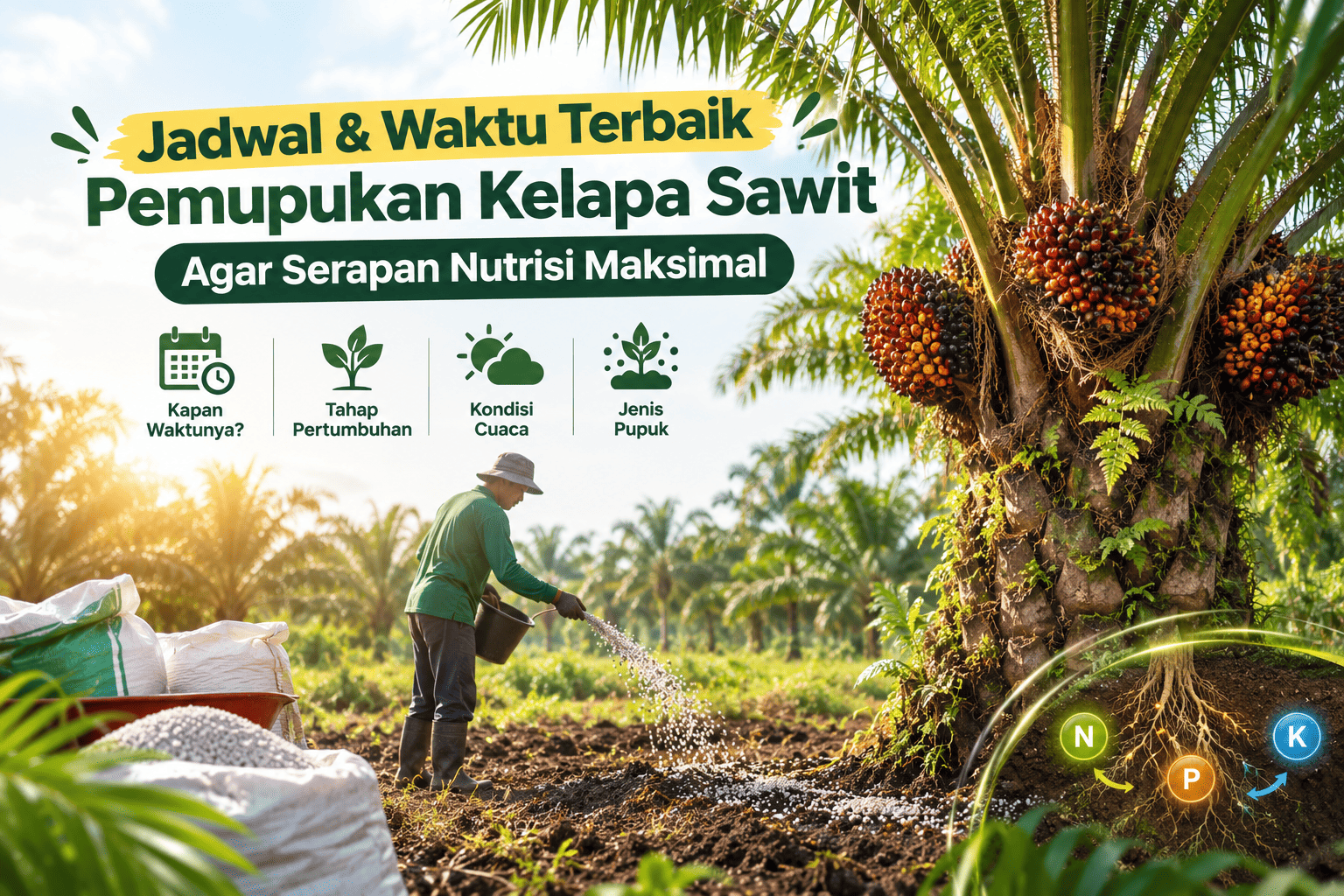
No matter how high the quality or price of a fertilizer, its impact will be minimal if applied at the wrong time. In oil palm plantations, precise timing is the decisive factor between maximum root absorption and costly nutrient loss through volatilization or runoff.
Understanding weather cycles, soil moisture levels, and uptake mechanisms enables plantation managers to design a precise and efficient fertilization calendar.
1. Rainfall and Seasonal Benchmarks (The Most Critical Factor)
Rainfall is the single most influential variable determining field fertilization success:
-
Peak Rainy Season (Rainfall > 300 mm/month):
Avoid application. Heavy rainfall causes severe nutrient leaching into deeper soil layers and surface runoff, washing away fertilizers before feeder roots can absorb them.
-
Extended Dry Season (Rainfall < 60 mm/month):
Suspend application. Parched soil renders roots inactive. Nitrogen-based fertilizers (such as Urea) suffer severe volatilization losses when exposed to high temperatures on dry ground.
-
Optimal Window (Beginning and End of Rainy Season):
The ideal window is during moderate rainfall (100–200 mm/month). Adequate soil moisture allows fertilizer granules to dissolve gradually and be efficiently absorbed by active feeder roots.
2. Annual Fertilization Calendar (Frequency & Split Applications)
For mature palms, annual dosage should ideally be split into 2 to 3 split applications (rounds) per year to ensure continuous nutrient availability:
-
Round 1 (Early Rainy Season / Around March – April):
Focuses on vegetative recovery and supporting floral initiation following the dry spell.
-
Round 2 (Late Rainy Season / Around September – November):
Focuses on fruit mesocarp development and maximizing bunch weight before the end of the year.
Crucial Note: Maintain a 2–4 week interval between applying incompatible fertilizer types. For example, never apply Calcium/Magnesium fertilizers (such as Dolomite) simultaneously with Urea, as chemical reactions cause Nitrogen to volatilize as ammonia gas.
3. Optimal Daily Application Windows
The time of day when fertilizer is applied directly impacts absorption efficacy:
-
Morning (07:00 – 11:00 AM): The ideal window. Soil temperatures remain cool, morning dew aids initial dissolution, and tree transpiration begins driving nutrient transport.
-
Late Afternoon (03:00 – 05:00 PM): A viable alternative, provided soil moisture remains adequate and direct midday heat has subsided.
Conclusion
Establishing a successful fertilization schedule requires aligning application rounds with climate cycles and soil moisture rather than strictly following rigid calendar dates. By applying fertilizer during moderate rainfall, splitting annual doses into 2–3 rounds, and spacing incompatible nutrients appropriately, oil palm plantations can achieve peak nutrient absorption for sustained FFB yields.