


 Sep 17, 2026
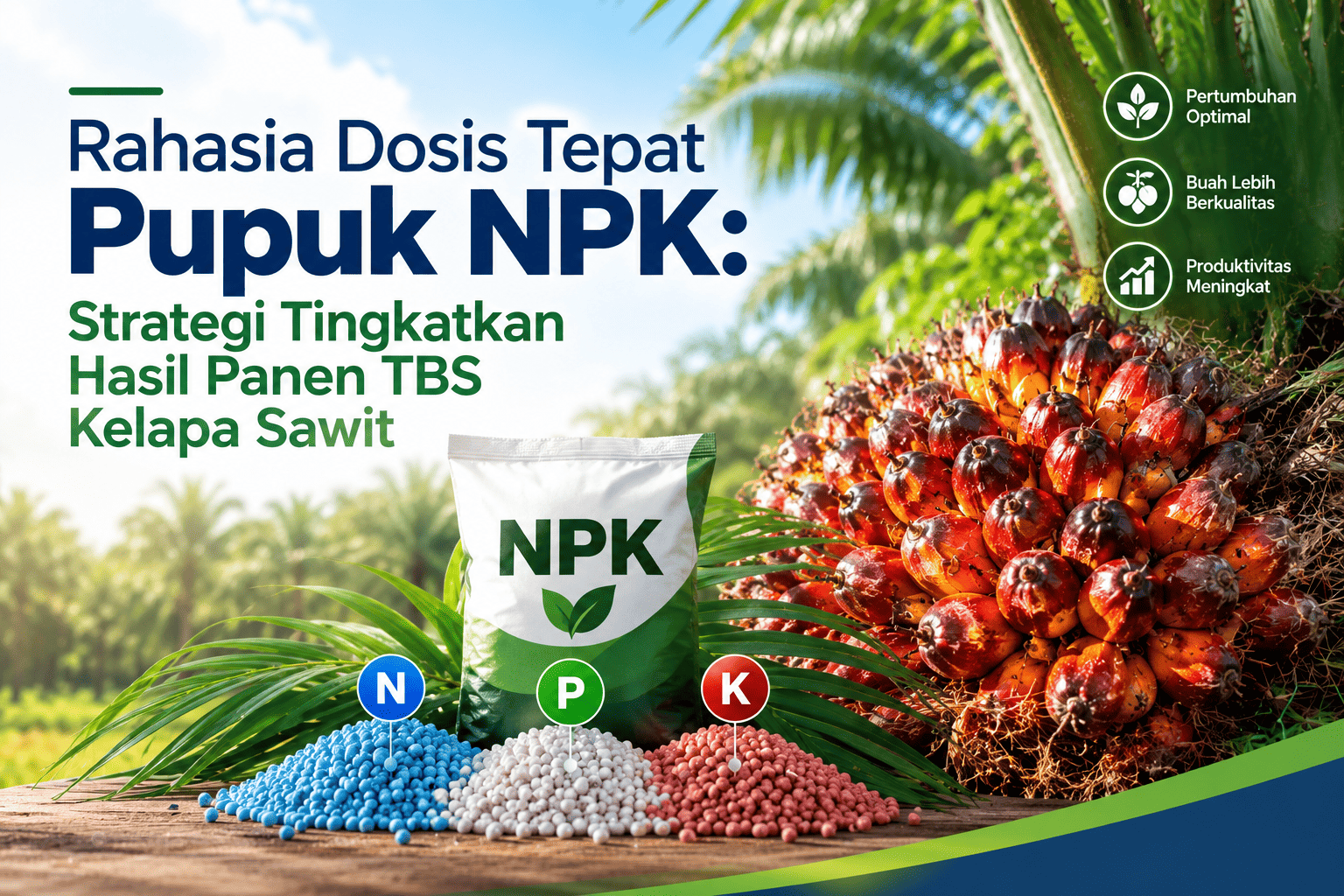
In the oil palm plantation industry, increasing the productivity of Fresh Fruit Bunches (FFB) is the primary key to achieving optimal profitability. One of the most crucial factors determining plant productivity is fertilization efficiency. Among various nutrients, NPK (Nitrogen, Phosphorus, and Potassium) fertilizer plays a foundational role as the "primary food" for oil palm trees.
However, applying NPK fertilizer cannot be done arbitrarily. Under-dosing results in stunted trees and low yield, while over-dosing wastes operational budgets and risks damaging soil structure. What, then, is the strategy for determining the precise NPK dosage to significantly boost FFB yields?
1. The Vital Role of NPK Nutrients in Oil Palms
Each element in NPK fertilizer fulfills a specific, complementary function:
-
Nitrogen (N): Stimulates vegetative growth, expands leaf surface area, and boosts chlorophyll formation for optimal photosynthesis.
-
Phosphorus (P): Encourages strong root system development, accelerates flowering, and strengthens the tree trunk.
-
Potassium (K): The most vital nutrient during the generative (fruiting) stage. Potassium enhances FFB weight, thickens the shell, and increases oil extraction rates (OER).
2. Understanding Dosage Requirements Based on Plant Age
The nutritional requirements of oil palms evolve as the trees mature. The main fertilization phases include:
-
Immature Phase (TBM) (Ages 0–3 Years):
-
Focus: Root, trunk, and leaf development (vegetative stage).
-
Application: NPK with higher Nitrogen proportions applied regularly (3–4 times per year), gradually increasing from 0.5 kg to 2.5 kg per tree annually.
-
-
Mature Phase (TM) (Ages > 3 Years):
-
Focus: Fruit development and expansion (generative stage).
-
Application: High-Potassium NPK formulations (such as NPK 13-6-27-4 or NPK 12-12-17-2). Average dosage ranges between 6.0 to 8.5 kg per tree per year, split into 2–3 applications.
-
3. Application Strategies for Maximum Nutrient Uptake
Determining the right dosage must be backed by correct field application techniques:
-
Leaf and Soil Analysis (Laboratory Testing): Conduct periodic Leaf Sampling Analysis (LSA) and soil testing before finalizing dosages. This ensures that the fertilizer addresses actual nutrient deficiencies in the field.
-
Broadcasting Method (Weeded Circle): Evenly broadcast fertilizer around the tree circle (1.5–2 meters from the trunk base), where active feeder root density is highest.
-
Timing with Weather Conditions: Avoid fertilizing during heavy rainfall (risk of leaching/runoff) or extreme drought (risk of volatilization without root absorption).
Conclusion
Applying the precise dose of NPK fertilizer is not merely about spreading nutrients—it is a calculated investment to maximize FFB weight and quality. By combining an understanding of plant growth stages, laboratory nutrient testing, and proper application techniques, oil palm plantations can achieve high and sustainable yields.