


 Sep 17, 2026
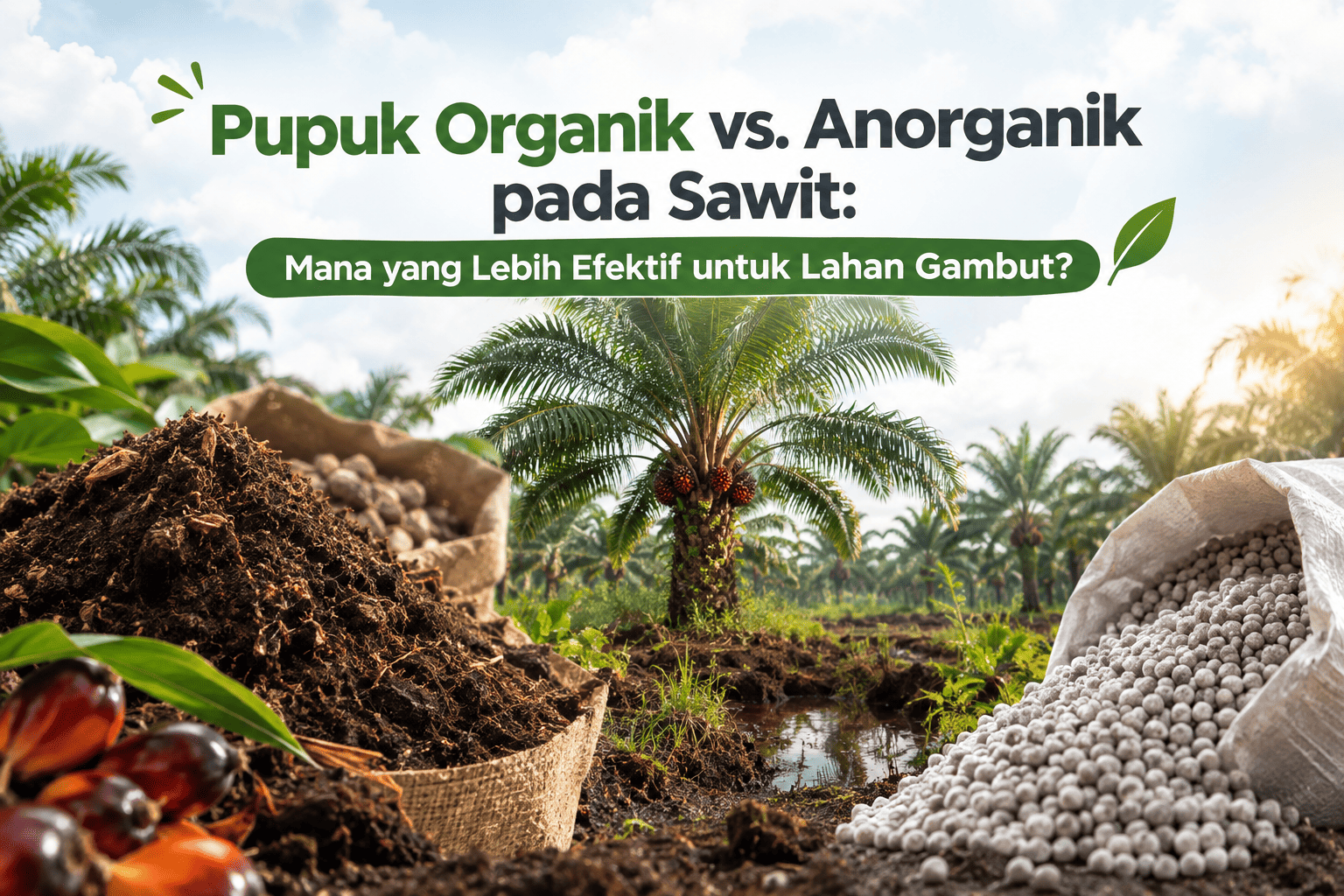
Peatlands account for a significant portion of oil palm plantation areas in Indonesia. However, managing peat soil comes with unique challenges: high acidity (low pH), severe deficiencies in macro and micro-nutrients, and limited cation exchange capacity (CEC). Under these extreme soil conditions, the effectiveness of different fertilizer types—organic versus inorganic (chemical) fertilizers—becomes a critical discussion for plantation managers.
Which option is truly more effective for boosting Fresh Fruit Bunch (FFB) yields on peat soil? Let us break down the comparison across key operational aspects.
1. Peat Soil Characteristics and Nutritional Challenges
Peat soil is formed from incomplete decomposition of organic matter under waterlogged conditions. Key characteristics include:
-
Extremely Acidic pH: Typically ranges from 3.0 to 4.5.
-
Severe Nutrient Deficiencies: Extremely low in essential macronutrients (K, P, Mg) and micronutrients (particularly Cu/Copper and B/Boron).
-
Low Nutrient Retention: High susceptibility to nutrient leaching due to the highly porous structure of peat.
2. Inorganic (Chemical) Fertilizer: Fast Response, High Leaching Risk
Inorganic fertilizers such as Urea, Rock Phosphate, MOP/KCl, and compound NPK fertilizers are popular choices because they supply readily available nutrients to the tree.
-
Advantages:
-
High, precisely measurable nutrient concentration.
-
Provides a rapid response to correct acute nutrient deficiencies.
-
-
Drawbacks on Peat Soil:
-
Highly susceptible to leaching in porous/wet peat environments before roots can absorb them.
-
Over-application without improving soil physical properties can further exacerbate soil acidity over time.
-
3. Organic Fertilizer: Improving Soil Structure and Nutrient Retention
Organic fertilizers—such as Empty Fruit Bunches (EFB), Compost, Palm Oil Mill Effluent (POME), or Liquid Organic Fertilizer (LOF)—play a vital role in restoring peat soil health.
-
Advantages:
-
Enhances CEC: Helps peat soil retain inorganic nutrients, preventing them from washing away easily.
-
Buffers Soil Acidity: Decomposing organic matter gradually helps raise soil pH levels.
-
Water Retention & Microbial Activity: Improves moisture retention and stimulates beneficial soil biological activity.
-
-
Drawbacks:
-
Lower nutrient concentration compared to chemical fertilizers, requiring large volumetric quantities.
-
Higher logistics, transportation, and labor costs for field application.
-
4. Synergistic Combination: The Optimal Strategy for Peatlands
Relying exclusively on either fertilizer type is rarely optimal for peatland management. The most effective strategy involves an integrated, balanced fertilization approach:
-
Empty Fruit Bunches (EFB) / POME as an Organic Foundation:
Applying EFB in inter-rows or around weeded circles acts as mulch, conserving moisture, enriching organic matter, and enhancing soil nutrient retention capacity.
-
Targeted Inorganic Fertilizer Application:
Once soil structure and retention capacity are improved by organic inputs, inorganic fertilizers (such as MOP/KCl and micronutrients like Boron and Copper) can be absorbed much more efficiently by root systems without excessive leaching losses.
Conclusion
On peat soil, organic and inorganic fertilizers should not be viewed as competitors, but as complementary tools. Organic fertilizer improves the soil "container" (soil health and retention capacity), while inorganic fertilizer supplies the precise, high-density nutrients needed for production. Combining both represents the most practical and effective strategy for sustainable, high-yielding oil palm cultivation on peatlands.