


 Sep 17, 2026
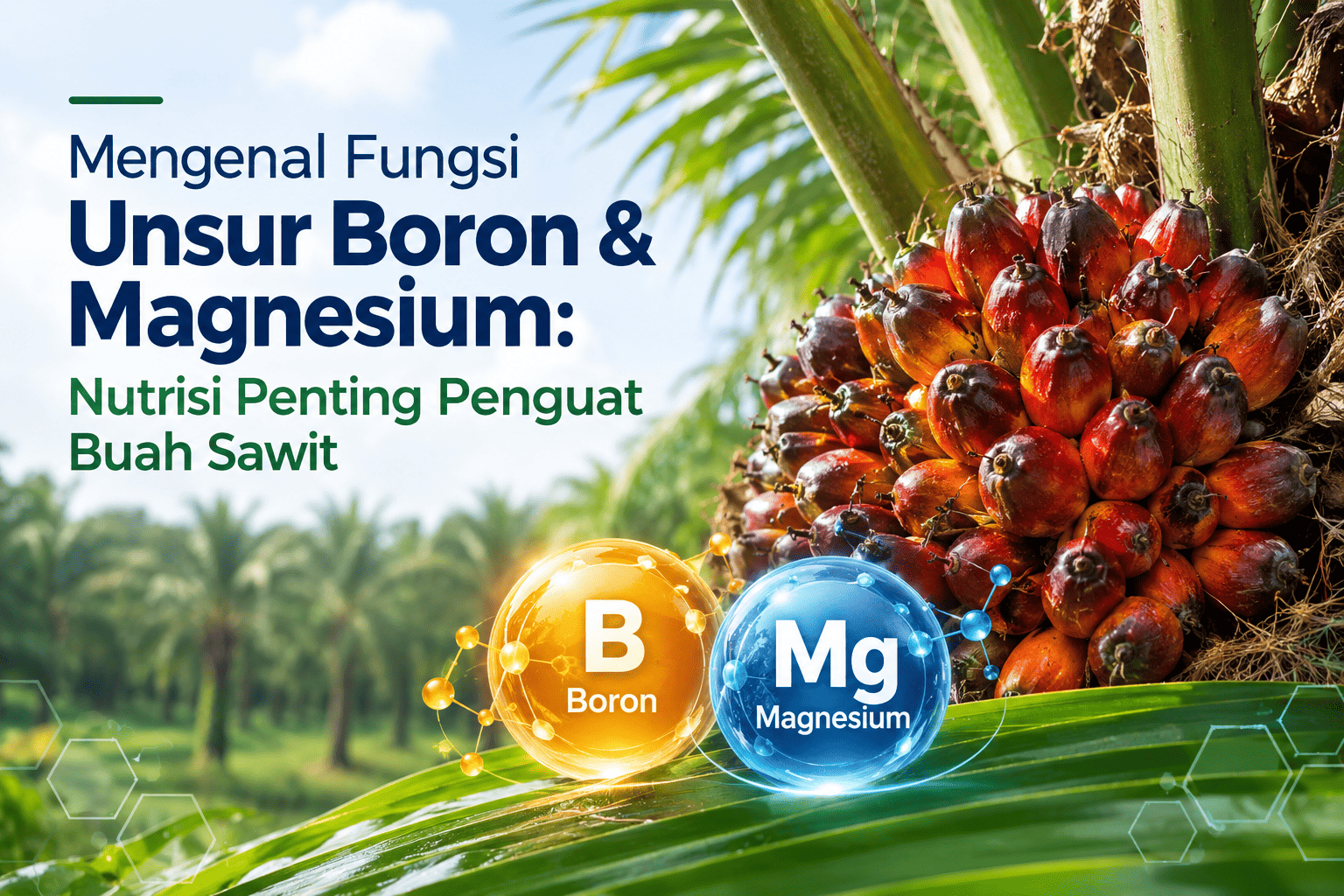
In oil palm fertilization, primary macronutrients like Nitrogen (N), Phosphorus (P), and Potassium (K) often take center stage. However, achieving maximum Fresh Fruit Bunch (FFB) weight and minimizing fruit drop requires adequate attention to secondary and micronutrients. Magnesium (Mg), a secondary nutrient, and Boron (B), an essential micronutrient, are the secret keys to strengthening fruit set and development in oil palms.
A deficiency in either element can lead to direct degradation of fruit quality and substantial yield losses.
1. The Vital Role of Magnesium (Mg) in Photosynthetic Efficiency
Magnesium serves as the central atom of the chlorophyll molecule, the green pigment responsible for photosynthesis.
-
Drives Carbohydrate Production: Without adequate Magnesium, fronds cannot produce sufficient assimilates (energy) to transfer to developing fruit bunches.
-
Prevents Chlorosis (Leaf Yellowing): Mg deficiency manifests as Orange Spotting or bright yellow-to-orange discoloration on older fronds exposed to direct sunlight.
-
Enhances Mesocarp Development: Sufficient Mg ensures proper filling of the fruit pulp (mesocarp), directly increasing overall FFB weight.
Fertilizer Sources: Commonly supplied through Kieserite ($MgSO_4$) or Dolomite ($CaMg(CO_3)_2$).
2. The Crucial Function of Boron (B) in Pollination and Fruit Set
Although required in trace amounts, Boron plays a decisive role during the reproductive phase of the oil palm tree.
-
Strengthens Tissue and Fruit Development: Boron is critical for cell division, cell wall synthesis, and meristematic growth at growing points.
-
Improves Pollination Success: Boron facilitates pollen germination and pollen tube growth toward the ovary. A lack of Boron leads to poor fruit set and parthenocarpic (seedless, underdeveloped) fruit formation.
-
Prevents Hook Leaf and Fruit Structural Defects: Boron deficiency causes leaf malformations (such as hook leaf) and leaves the fruit shell structure fragile and prone to premature cracking.
Fertilizer Sources: Typically applied using Borate products (e.g., Fertibor or Anchor Borate).
3. Deficiency Symptoms and Impact on Yield
| Nutrient | Deficiency Symptoms | Impact on Fruit & Yield |
| Magnesium (Mg) | Yellowing of older fronds exposed to sunlight, while shaded areas remain green. | Poor mesocarp development, reduced Average Bunch Weight (ABW). |
| Boron (B) | Hooked leaf tips (hook leaf), shortened fronds (skittle leaf), and apical bud rot. | Flower abortion, high percentage of seedless fruit (parthenocarpy), and premature bunch drop. |
4. Application Tips for Balanced Nutrition
-
Timing: Apply Magnesium and Boron according to regular fertilization schedules, particularly leading into and during generative stages (flowering and fruit development).
-
Precise Dosing: Boron application must be measured carefully, as the margin between optimum requirement and toxicity is extremely narrow.
-
Manage Nutrient Interactions: High doses of Potassium (K) without adequate Magnesium can induce Mg deficiency due to nutrient antagonism.
Conclusion
Magnesium and Boron form a complementary nutritional pair essential for optimizing oil palm production. Magnesium ensures the tree's energy factory (chlorophyll in fronds) functions at peak capacity to fill the fruit mesocarp, while Boron secures effective pollination and structural integrity of the fruit set. Maintaining balanced levels of both nutrients is a proven strategy to safeguard FFB weight and overall harvest quality.